WACOAL HOLDINGS CORP.


  1. Top
  2. CSR
  3. CSR Promotion Items
  4. Respect for Diversity

Change size of text
Enlarge text size
Reduce text size

The main contents from here

wacoal's CSR

The text from here

Respect for Diversity

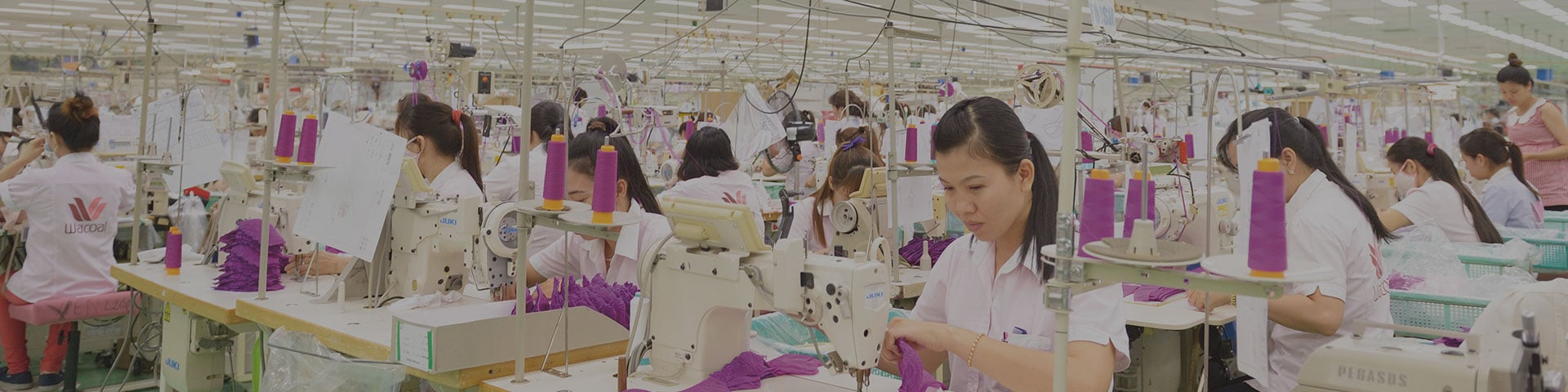
Wacoal seeks to create fair work environments that respect diversity of human resources. Regardless of race, gender, age and handicap, a diversity of people are working for the Wacoal Group worldwide.
In Japan, we have implemented numerous programs for human resources development to help highly motivated and deserving female employees to advance their careers. With regard to the employment of the handicapped, we have achieved the legally required employment ratio of handicapped workers. However, we also place importance on the creation of a working environment that is friendly to the handicapped, such as barrier-free facilities.
In other countries where we have conducted business activities, we strive to establish a long-term partnership with local communities by employing local people, naming local employees corporate officers, and promoting personnel management policy that gives due consideration to the general features, cultures, religions of individual countries.

cercleEmployment of the handicapped

We are fully aware that it is the responsibility of a company to promote employment of the handicapped, and Wacoal has been making proactive efforts in this respect. At present, about 60 people with disabilities are working for Wacoal, achieving the legally required employment ratio of 1.8%. However, we do not think that it is sufficient for a company to meet numerical conditions in terms of the employment of disabled people. We also place importance on creating and offering a working environment that is friendly to the handicapped.

Working environment improved through the monthly meeting “Deaf-Friendly Program”

In the workplace where individuals with and without disabilities work together, there might be many obstacles that non-disabled employees do not notice. As part of our efforts to remove such obstacles, we hold an informal meeting titled “Deaf-Friendly Program” on a monthly basis, in which employee with hearing difficulties gather and frankly exchange their opinions and views to improve the working environment.
As a result, various improvements have been made thus far, including e-mail announcement and the use of sign language interpreters at morning meetings and TV conferences.

Important after-employment support

A major problem involving the employment of the handicapped is low retention rates of employees with disabilities. Not a few people leave the company because they do not get used to the task given, or because they have trouble communicating with other people at the workplace. In conducting a hiring interview, we carefully listen to what kind of work they would like to do to reduce mismatch in employment. We also think that it is our responsible to provide sufficient after-employment support.
We will continue to make efforts to create a working environment that is friendly to the handicapped, including participation in meetings with people with disabilities arranged by the job assistance center Hello Work.

cercleCoexisting with Local Communities

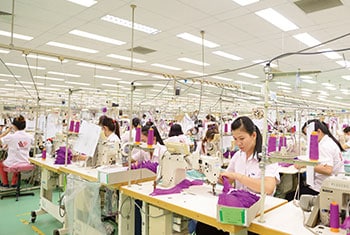
For fiscal 2012, Niigata Wacoal Sewing Corp. earned a Health, Labour and Welfare Minister’s award in recognition of excellence in the employment of the disabled—the highest ranking award in this category. Currently, as of March 2012, 4.88% of Niigata Wacoal Sewing’s workforce are disabled, the highest percentage in the Wacoal Group. Nine personnel with physical or mental disabilities work at the company. They include an employee who has worked for Wacoal for 30 years and received the Niigata Prefecture Governor’s award for outstanding workers in 2010. Further, operating bases that employ five or more disabled personnel are required to appoint a working-life counselor for the disabled (Act for Employment Promotion etc. of Persons with Disabilities). Niigata Wacoal Sewing currently has three qualified counselors.

Valuing Coexistence with Local Communities

Wacoal established its factory in Niigata 38 years ago. Without coexistence with the local community, Niigata Wacoal Sewing would not be what it is today.

“Business activities rooted in the local community” is an often heard phrase. We believe that business activities including the disabled are one way of being rooted in local communities.

Over many years, Niigata Wacoal Sewing has fostered a culture conducive to mutual understanding between disabled and the able-bodied personnel as well as to their collaborative efforts the workplace.

On the other hand, against the backdrop of companies seeking to improve profitability and efficiency, it is currently extremely difficult for disabled personnel to establish themselves at a company and continue working there.

At Wacoal, we value each person’s individuality and take care to treat people on a case-by-case basis. Occasionally, we seek advice from specialists. When, due to communication issues, we are having difficulty finding solutions that will support the day-to-day lives of disabled personnel, we consult with the Niigata vocational center of the Japan Organization for Employment of the Elderly, Persons with Disabilities and Job Seekers. Also, for issues after employment or relating to day-to-day life in the community, we seek assistance from “Life Up,” a center supporting disabled employment and lifestyles managed by the social welfare corporation Koseijijinkai.

In addition, we have introduced specially designed sewing machines to help operations run smoothly. In response to requests from disabled personnel wanting to work in sewing operations, we purchased programmable electronic machines specially designed for the disabled that drastically reduce the burden placed on the operator: enabling them to sew even the most complex shape by inputting the hem, number of needles, and speed in advance.

We believe combining organizational management that incorporates such equipment to facilitate work and systemizes operations while giving attention to each individual is essential for employing disabled personnel successfully.

Collaborating with Local Communities

We give fabric cuttings and scraps from our Niigata factory to nearby welfare facilities and schools, which weave them into towels and skipping ropes.

Near our Niigata factory, Kobo Hataya, managed by the Niigata Mizuho Fukushikai Social Welfare Corporation, is a welfare center for local disabled people that provides variety of work experience with a view to enhancing skills, finding jobs, and enabling independent participation in society. Every month, the welfare center cuts waist cords for different sizes of Wacoal’s CW-X sports conditioning wear.

cercleWacoal Career Service Corp.

Wacoal Career Service Corp. (WACS) is a staffing company of the Wacoal Group. The missions of WACS are to convey to more people the Wacoal Group’s ambition of contributing to society by helping women to express their beauty, and to contribute to society by providing an environment where people can work vigorously and with a sense of fulfillment.
WACS aims to be an enterprise that contributes to society by providing support to those who wish to work but have trouble finding a job opportunity—particularly to women, students, foreign students and disabled people.
WACS seeks to create a society in which people with disabilities are given more opportunities to play a more active role. When they enter the workforce, they might face various obstacles to overcome. As part of its efforts to reduce such obstacles, WACS provides support for the employment of the handicapped by serving as a mediator between businesses and disabled people.

WACS projects to support the employment of the handicapped

Among major companies in Japan, there is an increasing awareness of the importance of achieving the legally required employment rate of disabled persons, and the understanding of employment of the handicapped has been enhanced. In reality, however, many companies have not achieved the statutory employment rate, and many people with disabilities still have trouble finding a job.
There are more hurdles to overcome than people without disabilities, such as an age restriction and the degree of disability. As a company acting as a bridge between potential employers and jobseekers, we will continue to make efforts to get rid of companies’ preoccupation with employment of the handicapped and to give disabled jobseekers an explanation of the manners necessary for work and the hard reality of entering the workforce. Aiming to realize a society where a diverse set of people can work together on equal footing, we would like to expand our business to help disabled people play more active role in society.

return to the top of the text

returns to the local menu